
Hinge Reply Help For Prompts, Comments, And Follow-Ups
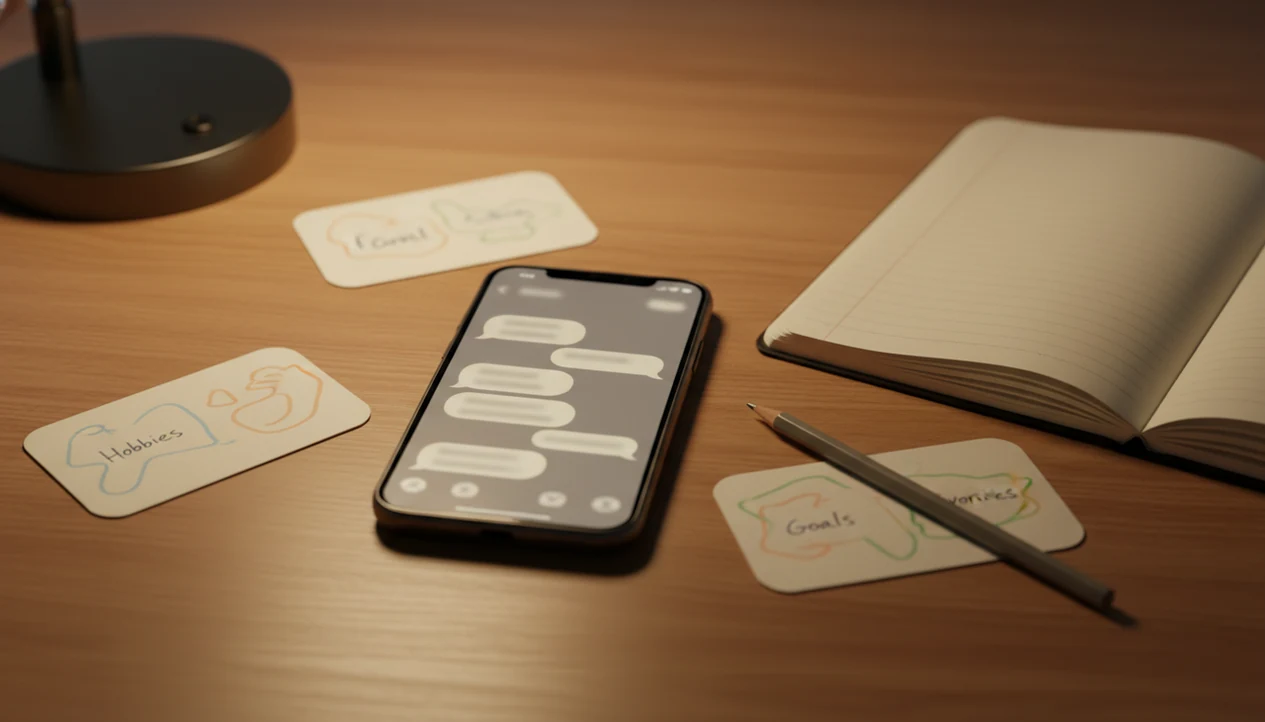
Hinge reply help works best when you use the other person’s prompt, photo, or last message to write something specific, light, and easy to answer. The goal is not to copy a perfect line, but to turn profile details into a natural opener, reply, or follow-up that sounds like you.
> Definition: Hinge reply help is guidance, examples, or AI-assisted coaching that helps users write better Hinge openers, prompt replies, profile comments, and follow-up messages from real conversation context.
TL;DR
- Strong Hinge replies mention one specific detail from their profile and end with a simple question or playful invitation.
- AI Hinge message help should act like a second opinion, not a full personality replacement.
- AI reply support works best when it suggests options, improves profile context, and flags toxic messages without writing over your personality.
Hinge Reply Help Definition And Best Use Cases
Hinge reply help is support for writing first messages, prompt comments, replies to likes, and follow-ups after a conversation pause. It works when it uses the match’s profile context, your chat history, and your actual voice instead of dropping in a generic pickup line.
People usually look for it at an awkward moment. A match liked your Hinge prompt, you opened the chat, and your thumb just hovers over send. The message feels too plain, too eager, or like something that could be sent to anyone.
Good help narrows the job. Are you starting the chat, answering a compliment, reviving a quiet thread, or moving toward a date? Tools like UnToxic can sit in that second-opinion role, but the final message still has to sound like a person you would recognize.
A better Hinge reply starts with context, not cleverness.
How Hinge Message Help Works Behind The Scenes
Hinge message help works by reading the match’s prompt, photo, comment, or last message, then turning that context into a reply goal and tone. The usual flow is simple: identify the cue, choose warm or playful energy, draft options, and personalize the one that feels closest to you.
AI dating assistants use text patterns, likely intent, and conversation context to infer what a message might mean. In plain English, they make an educated guess. They cannot truly know sarcasm, chemistry, cultural nuance, or whether “haha nice” means amused, bored, or distracted.
Hinge has also tested AI prompt feedback inside the app. Hinge reported that AI-based prompt feedback reduced poor-quality prompt answers by more than one-third and tripled high-quality prompt answers, according to its 2023 product discussion source.
The useful part is the nudge: more specific, less flat, easier to answer.
Before You Use Hinge Reply Help
Before you use Hinge reply help, make sure there is enough real context to work with and that you know what you want the message to do. A better draft starts with a clear cue, a clear goal, and a boundary you will not cross just to keep someone interested.
- Check the available context. Use a prompt answer, photo detail, comment, or previous message that gives you something concrete to respond to. If all you have is “hey,” keep the reply simple instead of forcing depth.
- Choose one message goal. Decide whether you are opening, clarifying, flirting, reviving a slow chat, or suggesting a date. One reply should not try to do all five.
- Pause if your body is saying no. Do not draft from anger, panic, pressure, or a feeling that the chat is unsafe.
- Set your boundary first. Know how you will handle sexual comments, insults, negging, or repeated pressure before you answer.
- Keep one or two details ready. A profile hobby, place, pet, food opinion, or photo clue gives the reply something human to hold onto.
How To Use Hinge Reply Help In 5 Steps
Use Hinge reply help as an editing process, not a copy-paste machine. The safest test is whether you would still stand behind the message if the date later reread it out loud.
- Copy the match’s prompt, comment, or last message. Include enough context so the reply does not miss the point.
- Pick the goal: start, flirt, clarify, revive, or ask out. One message should do one job.
- Choose a tone: warm, playful, direct, curious, or low-key. Match the energy, but don’t imitate them.
- Generate or draft 2-3 options, then edit into your own wording. Cut anything you would never say in real life.
- Send the message only if it feels honest and easy for the other person to answer. If it reads like a performance, rewrite.
A dating reply generator can help with options, but your edit is where the message becomes believable.
Step 1: Turn Hinge Prompt Replies Into Specific Openers
A strong Hinge prompt reply names the detail, reacts to it, and adds a question or playful angle. Repeating their prompt answer back without adding anything makes the other person do all the work.
Try these adaptable opener patterns:
- Travel prompt: “Your Lisbon photo is making a strong case for my next trip. Was it food, views, or chaos that made it memorable?”
- Food prompt: “You saying ramen is a personality trait is very specific and honestly fair. Spicy miso or tonkotsu?”
- Sunday routine: “A bookstore and a long walk is a very calm Sunday. Are you a browse-every-aisle person or a one-book mission person?”
- Simple pleasure: “Fresh sheets as a simple pleasure is underrated. What’s your other small luxury?”
- Weirdly attractive trait: “Being good at parallel parking is oddly persuasive. What trait would you defend as underrated?”
A Hinge prompt reply should feel like you noticed something. Not the whole profile. One useful detail.
Step 2: Write Hinge Photo Comments That Invite Replies
Photo comments work differently from prompt replies because the clue may be visual, situational, or vibe-based. The goal is to notice something specific without turning the message into an intense compliment.
Use the image as a conversation door:
- Travel photo: “That cliffside view looks unreal. Was this planned, or did you stumble into the best part of the trip?”
- Pet photo: “Your dog has main-character confidence in that picture. What’s their actual name versus their nickname?”
- Activity photo: “The climbing photo looks fun and mildly terrifying. Are you casual about it, or fully into the gear?”
- Food photo: “That pasta looks like it deserves its own review. Homemade or restaurant find?”
- Group/event photo: “That looks like a wedding where the dance floor actually worked. Are you a dance person or a strategic observer?”
Skip “cute” or “nice pic” by adding a concrete observation. Compliments should feel respectful, not objectifying, sexual, or adult.
Step 3: Use Hinge Opener Examples Without Sounding Copied
Hinge opener examples are templates, not finished messages. To make one usable, swap in one profile detail, adjust the tone, shorten the line, and add a natural question.
| Generic opener | Improved opener | Why it works |
|---|---|---|
| “Hey, how’s your day?” | “Your ‘ideal Sunday’ answer sold me on the farmers market plan. What’s your must-buy item?” | It uses a prompt detail and gives an easy answer. |
| “You’re cute.” | “Your concert photo has great energy. Was that a favorite band or a lucky random night?” | It compliments the moment, not just appearance. |
| “Tell me about yourself.” | “You mentioned pottery and horror movies, which is a strong combination. Which one came first?” | It feels curious without becoming an interview. |
| “We should grab drinks.” | “Your taco ranking sounds serious. Want to compare notes somewhere low-stakes this week?” | It connects the ask-out to profile context. |
A polished opener does not guarantee a date. For most users, a specific line beats a polished line because it proves the message was written for that match.
If you’re comparing styles across apps, a Bumble reply generator needs different pacing because Bumble openers often carry more first-message pressure.
Step 4: Send Hinge Follow-Up Texts After Slow Replies
A Hinge follow-up is reasonable after a natural pause, a dropped thread, or a clear busy-week signal. It should lower pressure, not demand proof that they still like you.
Try one follow-up, then let the chat breathe:
- Playful reset: “I’m rescuing this chat from the almost-forgotten folder. Still stand by your spicy margarita ranking?”
- Topic callback: “Circling back to your hiking rec. Was that a sunrise situation or a normal-person hour?”
- Date nudge: “This has been fun. Want to continue the ramen debate in person this week?”
- Low-pressure closer: “No pressure if life got busy. I liked chatting and figured I’d send one more note.”
- Graceful exit: “Seems like timing may be off. Wishing you a good week.”
Pew Research found that 45% of U.S. online dating users said recent dating-app experiences left them more frustrated than hopeful source. That frustration is a reason to avoid guilt trips, repeated double-texting, or “guess you’re too busy” messages.
The pocket check is real. Don’t let it write the follow-up.
Step 5: Check Hinge Messages For Authenticity And Red Flags
Review both what you send and what you receive, because better replies should not ignore safety. Hinge message help is most useful when it keeps the chat moving while also helping you spot pressure, insults framed as jokes, love-bombing, manipulation, boundary-pushing, and inconsistent stories.
Five facts to keep close:
- A message can be charming and still push past a boundary.
- A reply that sounds unlike you may create false expectations before a date.
- Pew reported that 53% of U.S. adults believe online daters often lie to appear more desirable source.
- Saving a message screenshot before unmatching or blocking is a practical safety habit.
- Red flag versus awkward phrasing depends on pattern, pressure, and context.
A reply assistant can suggest safer wording and flag toxic or manipulative messages, but it should not replace your judgment. Good Hinge message help should offer context-aware support, not scripts for pressure or manipulation.
Common Hinge Message Help Mistakes That Kill Momentum
Common Hinge message help mistakes make the other person work too hard or feel like the message could go to anyone. In a crowded app environment, sameness is easy to notice; Pew reported that 30% of U.S. adults had used a dating site or app in 2023, and usage was higher among adults under 30.
- Generic compliments: “You’re gorgeous” gives no path forward. Try a specific, respectful observation instead.
- Interview-style questions: Five questions in a row feels like screening. Ask one, then react.
- Overexplaining: A long disclaimer can make a simple message heavy. Trim it to the point.
- Walls of text: Big blocks are hard to answer on a phone. Send one idea.
- Copied viral lines: If it sounds like TikTok wrote it, rewrite it around their profile.
- Escalating too fast: Don’t jump from two messages to intense pet names or date pressure.
For cross-app habits, our guide on what to text back on Tinder shows why pacing changes by app culture.
Limitations
Hinge reply help can improve a message, but it cannot control another person’s interest, timing, or honesty. Use it as support, not as a guarantee.
- AI cannot guarantee matches, replies, dates, chemistry, relationships, or offline compatibility.
- AI may misread sarcasm, cultural context, humor, inside jokes, or emotional tone.
- Overusing canned Hinge opener examples can make users sound identical or obviously AI-generated.
- Red-flag detection can miss subtle manipulation or flag harmless awkward messages incorrectly.
- Hinge message help cannot fix a weak profile, incompatible preferences, poor photos, or unclear intentions.
- A better reply will not make someone available, emotionally ready, or interested.
- Users should not use reply help for deception, pressure, adult content, impersonation, or manipulation.
- If a conversation feels unsafe, blocking, reporting, or getting outside support may be the safer next step.
AI dating assistants can help organize your thinking, but they cannot decide who deserves your trust.
FAQ
What should I reply on Hinge?
Reply to one specific profile detail, then add a simple question. A good structure is “notice, react, ask,” such as naming their travel photo, making a light comment, and asking what made the trip memorable.
How do I answer Hinge prompts?
Answer Hinge prompts with a specific detail, a little personality, and room for someone to respond. Avoid one-word answers or vague claims like “I love adventures” unless you add a real example.
What is a good Hinge opener?
A good Hinge opener is personal, light, and tied to the match’s prompt, photo, or comment. It should be easy to answer and should not feel like a line sent to every match.
Should I use AI for Hinge?
AI can help brainstorm and edit Hinge messages if you keep your own voice and judgment. Tools like UnToxic can be useful for reply ideas or red-flag checks, but the final message should still be yours.
How do I revive a Hinge chat?
Revive a Hinge chat with one low-pressure callback to the last topic or a simple reset. Do not guilt-trip, demand an explanation, or keep sending follow-ups if they do not respond.
Why do Hinge matches stop replying?
Hinge matches stop replying for many reasons, including app fatigue, busy schedules, other conversations, low compatibility, or unclear momentum. Respond calmly once if the chat seemed promising, then move on if there is no answer.
Are Hinge pickup lines effective?
Personalized openers usually work better than generic Hinge pickup lines. A line connected to a real profile detail feels more natural and gives the other person an easier way to reply.
How fast should I reply?
Reply when you can answer thoughtfully without overthinking every word. Same day is usually fine for active chats, but a message sent at 11:38 p.m. can also wait until morning if you are tired.