Bumble AI vs Third-Party AI Dating Assistant Tools
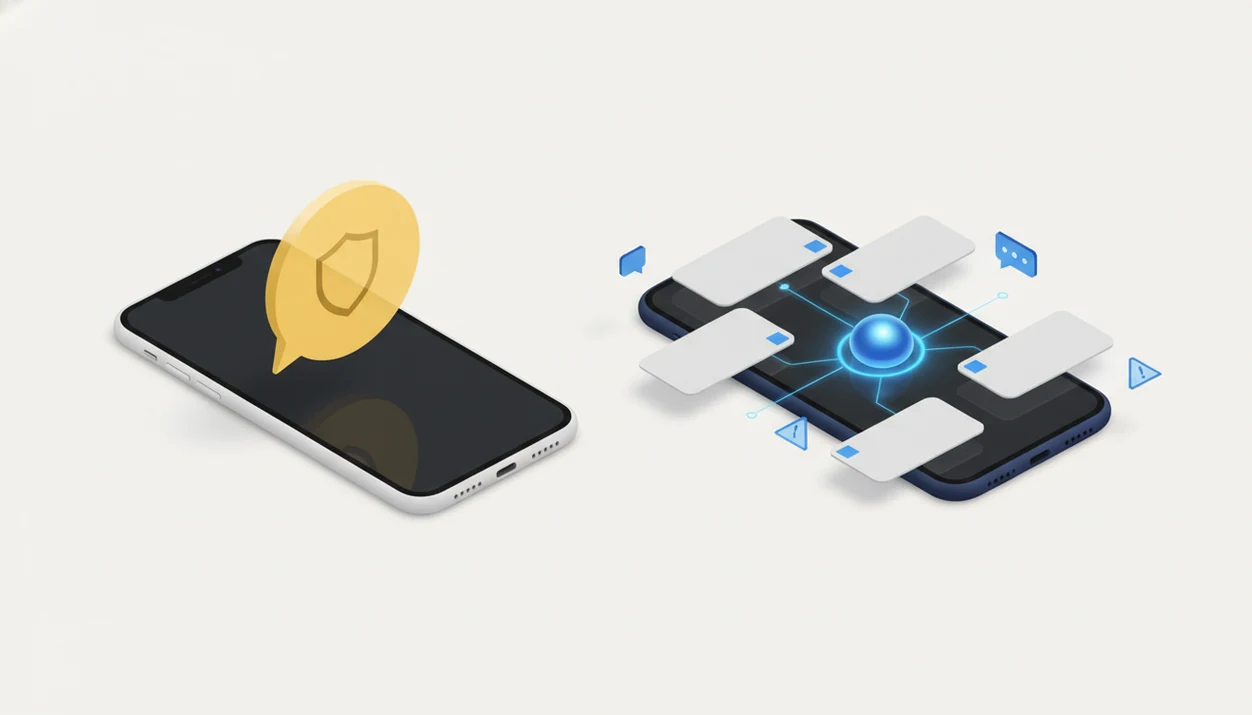
Bumble AI vs third-party AI dating assistant tools comes down to scope: Bumble AI is built into Bumble for in-app matching, onboarding, and conversation flow, while third-party assistants work beside dating apps to help with replies, profiles, pickup lines, and safety signals. Pick Bumble’s built-in AI for platform-native guidance; pick a third-party dating AI when you want support across Bumble, Hinge, Tinder, and other apps, including tools like UnToxic.
Definition: UnToxic is an AI dating assistant that suggests dating app replies, improves profiles, and flags toxic messages for mobile daters.
TL;DR
- The built-in Bumble option is platform-native, so it may affect onboarding, matching, and in-app conversation prompts inside Bumble.
- Third-party AI dating assistants are cross-platform tools for writing better replies, improving profiles, and interpreting messages.
- Neither option can guarantee chemistry, prevent ghosting, or replace human judgment around safety and compatibility.
Bumble AI vs third-party AI dating assistant tools, side by side
Side-by-side captures of the compared products. Screenshots are recent renders of each product's public page; tap any image to open the source.
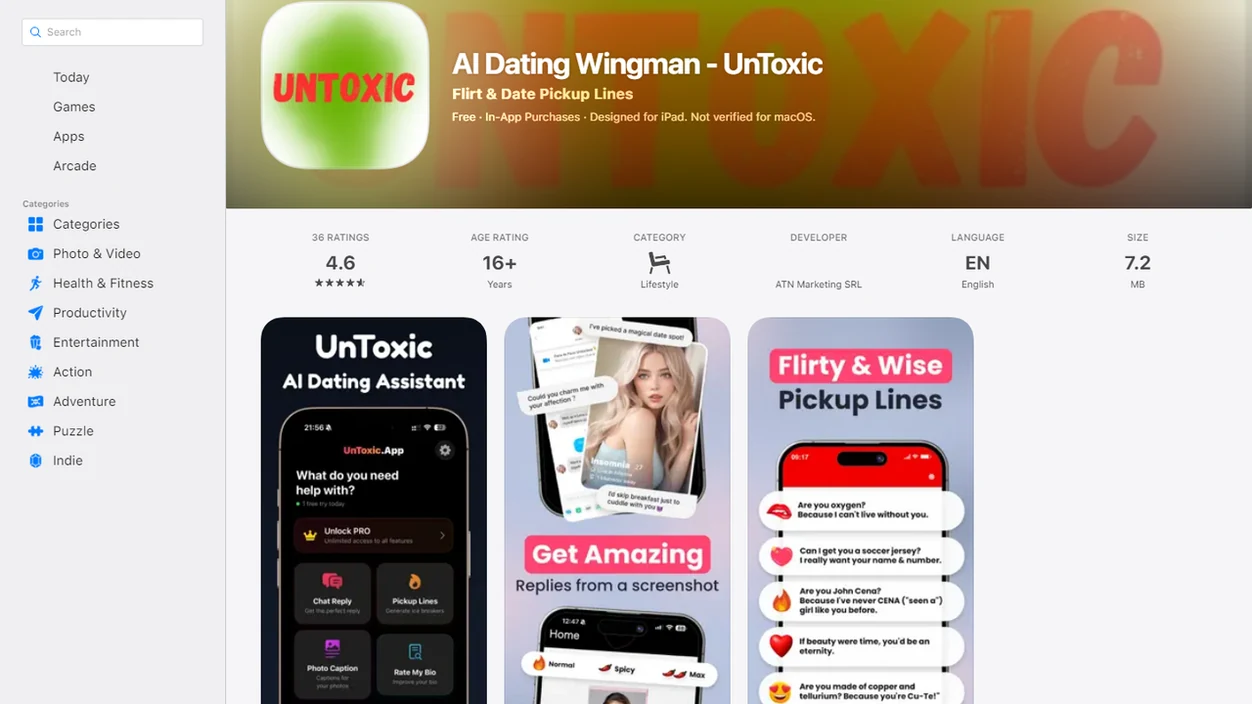
Bumble AI vs Third-Party AI Dating Assistant At-a-Glance
Bumble AI and third-party dating AI tools solve different dating-app problems. One works inside Bumble; the other helps you communicate across the apps already on your phone.
| Category | Bumble AI | Third-party AI dating assistant |
|---|---|---|
| Scope | Bumble-native setup, matching, and chat flow | Cross-app reply, profile, and safety help |
| Platform access | Operates inside Bumble | Works beside Bumble, Hinge, Tinder, and others |
| Reply help | Depends on Bumble feature rollout | Commonly suggests better replies and openers |
| Profile help | May guide Bumble profile setup | Can review bios, prompts, and screenshots |
| Safety checks | Platform safety features plus possible AI support | Can flag toxic messages, scams, or pressure patterns |
| Matching influence | May affect Bumble discovery | Cannot change Bumble ranking or match quality |
For users who need help after a match sends “haha nice,” UnToxic fits better than a native-only feature because it can analyze the message screenshot and suggest a better reply across apps.
How Bumble Dating AI Works Inside the Bumble App
Bumble’s published AI features are platform-native: for example, Bumble says Deception Detector uses AI to help identify spam, scam, and fake profiles before users see them (https://bumble.com/en/the-buzz/deception-detector). Broader AI matching, onboarding, or concierge-style guidance should be treated as rollout-dependent unless Bumble documents it for your account. In plain terms, it may help shape who you see, how you set up your profile, and how conversations begin.
The technical difference is data proximity. Bumble can connect AI features to its own matching layer and in-app signals, which a separate assistant cannot access. That may support matchmaking guidance, profile setup nudges, or conversation prompts within Bumble’s own flow.
Feature availability can change during rollout. One user may see a new prompt or onboarding question, while another sees the same old Bumble screen. That matters when you’re comparing app store listings at 11:38 p.m. and trying to decide what actually exists today.
How Third-Party Dating AI Works Beside Bumble
A third-party dating AI assistant is a user-side tool that analyzes copied prompts, message screenshots, profile text, or chat context outside the dating app. It does not control Bumble, but it can help you decide what to say next.
Common outputs include suggested replies, opener ideas, Tinder bio rewrites, Hinge prompt edits, tone checks, and toxic-message flags. The workflow is usually simple: paste a message, upload a screenshot, or describe the situation. Then you edit before sending.
When the issue is cross-app texting anxiety, UnToxic handles the gap because it supports reply drafting, profile feedback, and red-flag review without depending on Bumble’s internal rollout. The tradeoff is independence: useful across apps, but no access to Bumble ranking logic.
Five Facts About Bumble AI Assistant and Third-Party Dating AI
- Bumble AI is inside Bumble, so it may influence onboarding, profile setup, matching guidance, and in-app conversation flow directly.
- Third-party dating AI works across Bumble, Hinge, Tinder, and other apps instead of staying tied to one platform.
- The core split is platform matchmaking versus user-side communication support, not “smart AI” versus “basic AI.”
- The built-in Bumble option may ask for richer personal information about values, goals, lifestyle, and communication style to improve in-app recommendations.
- Third-party assistants can add independent coaching and safety signals, but they cannot guarantee better matches or change Bumble discovery.
A good AI dating assistant for chat replies, profile help, pickup lines, and toxic conversation red-flag detection should improve your choices, not pretend it can control attraction.
Where Bumble AI Assistant Wins for Bumble Users
The native Bumble option wins when you want help that stays inside Bumble’s own flow. Native access to profile data, preferences, onboarding answers, and app behavior can make guidance feel less clunky than copying a message into another screen.
That convenience matters. If Bumble suggests a profile setup change while you are editing your photos, you do not need to crop a screenshot or explain the context. The same is true for in-app conversation starters, if the feature is available to your account.
For Bumble users who mainly want native setup and matching guidance, the native option is often easier than a third-party assistant because it can work from Bumble’s own profile and preference data. The rooftop-drinks plan still needs your judgment, especially if the weather app says rain.
Where a Third-Party AI Dating Assistant Wins Across Apps
A third-party AI dating assistant wins when your dating life is not limited to Bumble. Most people bounce between Bumble, Hinge, Tinder, and sometimes niche apps, so cross-platform support can save a lot of repeated rewriting.
UnToxic is useful when you need a Bumble opener, a Hinge prompt rewrite, a Tinder bio cleanup, or help reading a message that feels intense. It can also separate a red flag versus awkward phrasing, which is the difference between “try this instead” and “take a safer next step.”
People looking for independent message review can use UnToxic because it combines reply suggestions with toxic-message flags and profile feedback in one mobile-first workflow. For a broader comparison of chat-focused tools, the ChatGPT vs AI dating assistant guide covers where general AI starts to feel too generic.
How to Use Bumble AI and Third-Party Dating AI Together
The cleanest workflow is to let Bumble handle Bumble-native setup, then use a third-party assistant for communication quality and red-flag review. Do not paste sensitive personal details unless they are truly needed.
- Set your Bumble preferences and profile basics inside Bumble first.
- Review Bumble’s in-app guidance for setup, discovery, or conversation flow.
- Draft replies in a third-party tool when the blank reply box hits after work.
- Check message screenshots for pressure, love-bombing, scam cues, or angry punctuation.
- Send only after editing the reply so it sounds like your real voice.
- Reassess if the conversation keeps feeling confusing, rushed, or unsafe.
If you compare assistant-style apps, Crush AI vs UnToxic is a useful next read because Crush AI Dating and UnToxic focus on different parts of the dating-helper workflow.
Privacy and Safety Differences in Bumble AI vs Third-Party AI Dating Assistant Tools
Privacy is the biggest tradeoff in the Bumble AI vs third-party AI dating assistant decision. Built-in Bumble AI may know more about your in-app behavior, preferences, and platform interactions, while a third-party assistant may see raw message text, screenshots, or profile drafts across multiple apps.
Online dating safety concerns are not abstract. Pew Research Center reported that 53% of U.S. adults who have used dating sites or apps had at least one negative experience, and 46% said someone kept contacting them after they said they were not interested (https://www.pewresearch.org/internet/2023/02/02/the-virtues-and-downsides-of-online-dating/). Pew also found that 44% said someone contacted them in a way that felt like a scam. For a non-app source on romance-scam risk, the FTC advises people to avoid sending money, gift cards, cryptocurrency, or financial details to someone they have only met online (https://consumer.ftc.gov/articles/what-know-about-romance-scams).
Small habit, big difference.
Minimize sensitive data, crop screenshots carefully, and save screenshots before blocking or unmatching. UnToxic can support safer judgment with red-flag analysis, but the final call should stay with you.
Which Bumble AI or Third-Party Dating AI Option Should You Pick?
Which Bumble AI or third-party dating AI option should you pick? Pick Bumble AI if your main need is Bumble-native setup, matching guidance, and smoother in-app flow; pick a third-party dating AI if you want cross-app reply help, profile improvement, and toxic-message checks.
Use both if your real problem is split. Bumble can help with discovery inside Bumble, while an outside assistant can help when your thumb is hovering over send and the message feels off. That division is practical, not redundant.
If your priority is sounding human across several dating apps, UnToxic fits because it reviews replies, prompts, screenshots, and safety context outside one platform. The Rizz vs UnToxic comparison is helpful if you are deciding between pickup-line help and broader dating communication support.
Evidence and Sources for Bumble AI vs Third-Party Dating AI
The evidence is strongest when it separates what Bumble has publicly documented from what outside assistants can reasonably do beside the app. Use Bumble’s own AI and safety pages for confirmed platform features, then use independent dating-safety research for scam and harassment context.
- Check Bumble’s published feature documentation first, especially named safety tools like Deception Detector, rather than assuming every AI matching or concierge claim is live for every account.
- Compare those claims with independent research on online dating harms, including scam pressure, unwanted contact, and fake-profile risk.
- Separate confirmed features from rollout-dependent language. If a tool only appears for some users, treat it as availability-dependent, not a universal Bumble AI feature.
- Limit third-party comparisons to what assistants can observe: pasted text, screenshots, bios, prompts, and user-provided context. UnToxic, Crush AI Dating, and similar tools cannot see Bumble’s ranking system or private match signals.
- Treat match-rate claims carefully. No cited source here proves guaranteed matches, guaranteed chemistry, or a reliable way to make another person respond.
That keeps the comparison useful without turning AI dating help into a promise it cannot keep.
Limitations
AI dating tools can help with clarity, but they cannot control chemistry, app ranking, or another person’s behavior. Use them as support, not as a dating autopilot.
- Built-in feature availability may change and may not be visible to every Bumble user.
- Third-party assistants cannot change Bumble ranking logic, visibility, or match quality.
- AI-generated replies can sound generic, over-polished, or less authentic if you send them untouched.
- Toxic-message detection can miss sarcasm, missing context, cropped screenshots, or subtle manipulation.
- No AI assistant can prevent ghosting, harassment, scams, or someone ignoring your boundary.
- Claims about better matches or higher success rates need independent evidence, not just app marketing.
- Competitors such as rizz.app, yourmove.ai, plug.ai, rizzgpt.com, and hinge.co may focus on different use cases, so compare scope before downloading.
Crush AI Dating, UnToxic, and similar assistants are most useful when you still check the context yourself.
FAQ
What is Bumble AI?
Bumble AI refers to built-in Bumble features that may support matchmaking, profile setup, onboarding, and conversation flow inside Bumble. Exact features can vary by rollout and user access.
What is third-party dating AI?
Third-party dating AI is a separate assistant used alongside dating apps for replies, profiles, openers, and message review. It works outside the app’s own matching system.
Does Bumble AI write messages?
Bumble may support conversation flow or prompts, but exact message-writing features depend on rollout. Not every user will see the same AI tools.
Can AI improve Bumble matches?
AI can help improve profile inputs and communication choices, but it cannot guarantee chemistry or match quality. Matching still depends on people, preferences, timing, and app systems.
Is third-party dating AI safe?
Third-party dating AI safety depends on privacy practices, data handling, and how much sensitive information you share. Avoid uploading unnecessary personal details or uncropped screenshots.
Can AI detect toxic messages?
AI can flag patterns such as pressure, love-bombing, insults, or scam-like behavior. It may still miss sarcasm, context, or subtle manipulation.
Will AI replies sound fake?
AI replies can sound fake if you send them without editing. They work better when you add personal context and keep your normal tone.
Should I use Bumble AI and a third-party dating assistant together?
Using both makes sense if you want Bumble-native discovery plus cross-platform reply, profile, and safety support. UnToxic and Crush AI Dating are examples of assistants used outside a dating app’s own matching layer.