Is Using AI For Dating Cheating Or Just A Second Opinion?

So, is using AI for dating cheating? Not automatically, but it can become cheating when it hides who you are, replaces honest intimacy, or creates secret romantic or sexual interactions outside agreed boundaries. UnToxic can help with wording, profile edits, and red-flag checks, but the ethical line still depends on honesty, consent, and whether the message reflects you.
Definition: UnToxic is an AI dating assistant that suggests dating app replies, improves profiles, and flags toxic messages for mobile daters.
TL;DR
- Light AI help with grammar, tone, profile wording, or first-message confidence is usually closer to getting a second opinion than cheating.
- Secret romantic, sexual, or emotionally intimate AI relationships are viewed as cheating by many singles and partners.
- The ethical test is disclosure, intent, and dependence: are you communicating as yourself, or outsourcing your dating identity?
How is using ai look
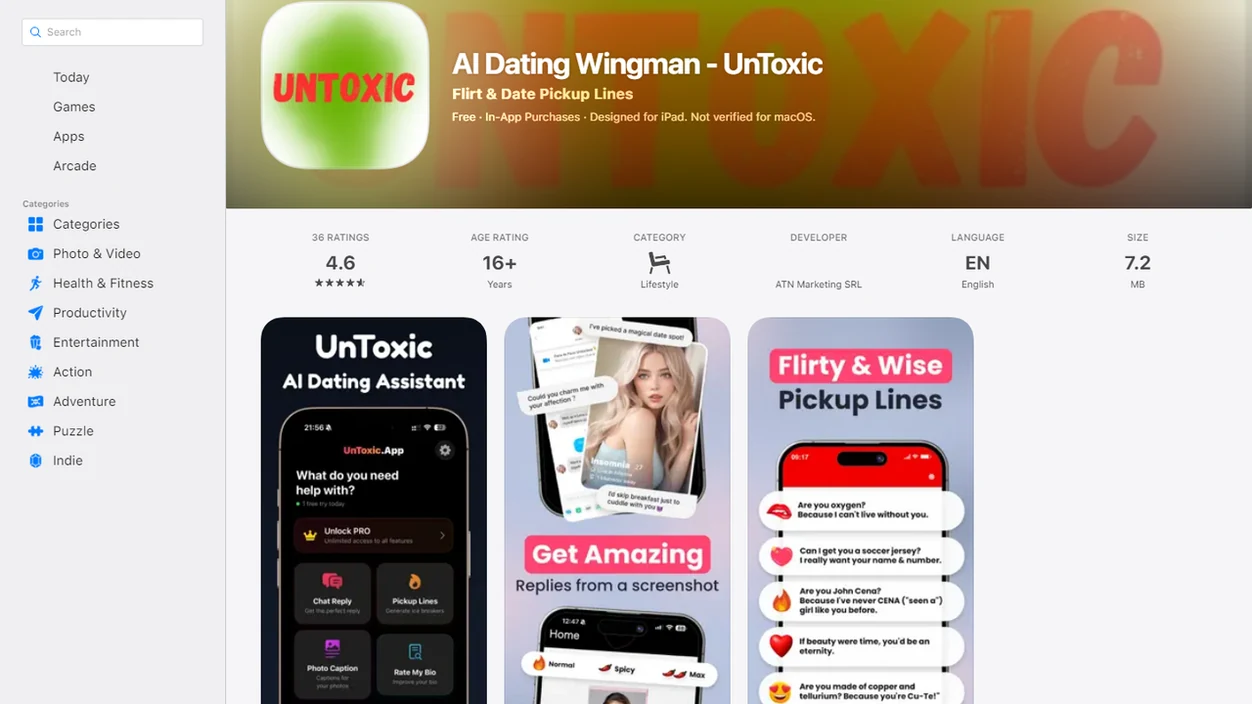
Side-by-side captures of the compared products. Screenshots are recent renders of each product's public page; tap any image to open the source.
AI Dating Ethics At A Glance: Help Versus Cheating
AI dating ethics usually come down to whether the tool helps you express yourself or helps you pretend to be someone else. Friends edited Tinder bios and Hinge prompts long before ChatGPT, so the new issue is not help itself. It is scale, secrecy, and emotional replacement.
| AI use | Usually okay | Risky | Likely cheating |
|---|---|---|---|
| Grammar or clarity edits | Yes | If it changes meaning | No |
| Brainstorming a Bumble opener | Yes | If copied without personality | No |
| Red-flag detection on a message screenshot | Yes | If context is missing | No |
| AI sustaining your whole chat style | No | Yes | Often |
| Secret AI sexting or romance | No | Yes | Often |
| AI catfishing with fake life details | No | Yes | Yes |
A useful AI dating assistant—whether UnToxic, Crush AI Dating, or a general ChatGPT workflow—should support clearer choices, not replace your identity.
Why AI-Written Dating Messages Feel Different From Editing Help
Are AI messages cheating? They can feel different because dating messages carry more than facts. A blue iMessage bubble or a Hinge reply can signal attention, humor, desire, availability, and whether someone actually noticed the last thing you said.
Polishing a real thought is different from generating a persona you cannot sustain in person. If you type, “I liked talking about your hiking trip,” and AI makes it warmer, the core is still yours. If AI invents outdoorsy charm after you barely leave your apartment, the match is meeting a costume.
The concern is not imaginary. In a national U.S. survey of 2,000 singles, 61% said falling in love with an AI chatbot or sexting with an AI counts as cheating in a romantic relationship, according to the Kinsey Institute source.
Five AI Dating Ethics Facts That Set The Boundary
AI dating ethics are easiest to judge when you separate assistance from substitution. The line gets clearer when you look at disclosure, intent, dependence, and safety.
- Light drafting is different from secret intimacy. A clearer first message is not the same as maintaining a hidden romantic AI relationship.
- Disclosure matters. If the AI use would change someone’s consent, especially in a relationship, hiding it is a warning sign.
- Intent matters. Using AI to soften an anxious reply is different from using it to love-bomb or manipulate.
- Dependence matters. If every better reply comes from AI and you cannot speak that way in person, the match may be bonding with a performance.
- Safety use is legitimate. Checking a message for pressure, coercion, or boundary violations can be a safer next step.
Pew found that around 1 in 5 U.S. dating site or app users had asked someone else for profile or message help source. AI is a newer form of assisted communication, not a totally new ethical category.
That Pew finding is about human help with profiles and messages, not AI specifically. It is useful context, but it should not be treated as proof that every AI-written message feels acceptable to matches or partners.
How ChatGPT Dating Prompts Work Behind The Scenes
ChatGPT dating prompts work by using a large language model to predict useful text from your prompt, context, tone instructions, and examples. In plain terms, it guesses a fitting next message based on patterns in language, not personal knowledge of your match.
The model does not know your relationship history, private intentions, body language, or the awkward pause after a date unless you provide that context. A screenshot crop that cuts off the previous message can change the whole reading.
Shallow prompts create shallow output. “Make me charming” can produce generic confidence, exaggerated affection, or a line you would never say in the elevator mirror before a first date.
Dating assistants can also analyze language for toxic patterns, pressure, boundary violations, and manipulation signals. UnToxic is useful here because red-flag review is about checking the context, not manufacturing a seductive script.
How To Use AI Dating Prompts Without Misrepresenting Yourself
Use AI dating prompts ethically by making your own meaning the starting point and the final filter. The safest workflow keeps the chat moving without letting AI become your dating identity.
- Set your boundaries before use: decide whether AI can help with grammar, tone, profile prompts, red-flag checks, or only first drafts.
- Write your real point first, even if it is messy: “I had fun and want to see you again, but I’m not ready for a late-night invite.”
- Ask for tone options, not fake feelings: “Make this clearer and kinder, don’t add attraction I didn’t express.”
- Edit the output back into your voice, including your normal humor, sentence length, and texting pace.
- Disclose when AI meaningfully shapes intimacy, ongoing conversations, or relationship boundaries.
Someone staring at three rewritten chat bubbles at 11:38 p.m. should send the version they can stand behind tomorrow. For anxious daters, UnToxic fits because reply suggestions can be revised into your own voice through a message-by-message workflow.
Where AI Dating Assistants Like UnToxic Help
AI dating assistants help most when they reduce friction without replacing judgment. UnToxic fits ethical dating support because the main jobs are reply suggestions, profile improvement, opener brainstorming, and toxic-message red-flag detection.
- First-message clarity: A cheesy line tested in draft can become a warmer opener that still sounds like you.
- Anxious reply softening: A tense paragraph can be shortened before it turns into an accidental apology essay after one match.
- Boundary setting: A vague “maybe” can become “I’m not comfortable with that, but I’d be open to meeting earlier.”
- Red-flag review: A message screenshot can be checked for coercive language, pressure, or repeated boundary pushing.
If your priority is sounding more respectful without sounding robotic, UnToxic covers the middle ground with reply options, profile feedback, and red-flag detection in one mobile-first workflow. The user remains responsible for truth, consent, and follow-through.
A good test is simple: if the reply would sound strange coming out of your mouth over coffee, edit it before sending.
Where AI Dating Tools Cross Into Misrepresentation
AI dating tools cross into misrepresentation when they create a false romantic identity instead of helping a real person communicate. That includes chatfishing, where AI sustains a humor style, life story, emotional availability, or confidence level the user cannot honestly maintain.
Secret romantic or sexual AI interactions can also damage trust inside a relationship. Pew has reported that 51% of U.S. adults in relationships say online cheating would be as upsetting as physical cheating, which helps explain why ‘it was only a chatbot’ may not reassure a partner source.
Using AI to pressure, manipulate, love-bomb, dodge accountability, or maintain multiple deceptive conversations is not harmless assistance. It is a strategy problem.
When red flag versus awkward phrasing is the issue, UnToxic is better used as a check on pressure or manipulation, because the red-flag workflow asks what the message is doing rather than just how to answer it. For a deeper definition, read our guide to chatfishing.
AI Dating Boundaries For Singles And Couples
AI dating boundaries should cover message drafting, profile edits, AI companion chats, sexual content, and emotional dependence before secrecy creates conflict. If you would hide the AI use because it changes consent, treat it as a problem.
Boundary script for a dating app match
“I sometimes use AI to make a message clearer, but the opinions and interest are mine. If that feels weird, I’m happy to just text normally.”
A match looking for transparency can usually handle light wording help better than a surprise later. For profile wording, the same rule applies: do not invent height, hobbies, politics, photos, or relationship goals.
Boundary script for an exclusive partner
“I want us to agree on what AI use counts as okay. I’m fine with grammar help, but I don’t want secret romantic chats, sexual AI roleplay, or AI replacing conversations we should have with each other.”
Couples who discuss this early have fewer gray areas later. For screenshot handling and consent, our AI dating privacy guide covers safer habits before uploading chats.
Four Myths About AI-Written Dating Messages
AI-written dating messages create confusion because people argue about the tool instead of the behavior. These four myths cause the most trouble.
Myth 1: If it is AI, it cannot be cheating. Many singles disagree, especially when the AI interaction is romantic, sexual, secret, or emotionally intimate.
Myth 2: Any AI-written dating message is unethical. A grammar pass or tone check is closer to asking a friend, as long as the message still reflects your real intent.
Myth 3: AI sexting is harmless if no one meets in person. Partners may still experience hidden sexual AI use as a breach of trust. No physical meeting does not erase secrecy.
Myth 4: AI dating assistants are only pickup-line machines. Tools like UnToxic can also help with a Tinder bio, a Hinge prompt, a boundary reply, or a message screenshot that made your stomach drop. For safer wording examples, use safe AI dating messages as the standard.
AI Dating Assistants vs ChatGPT vs Asking A Friend
The best choice depends on what kind of help you need. Use a dating assistant for context-aware safety, ChatGPT for flexible drafting, a friend for lived history, and yourself when authenticity matters more than polish.
| Option | Best for | Watch out for |
|---|---|---|
| UnToxic | Replies, profiles, red-flag checks | Still needs your final judgment |
| ChatGPT | Open-ended brainstorming | Requires careful prompts and editing |
| Friend | Personal context and reality checks | Bias, projection, or overprotection |
| Writing alone | Maximum authenticity | Anxiety, spiraling, or unclear tone |
A dedicated dating assistant wins when the situation is specific: a weird screenshot, a boundary reply, a profile prompt that should not oversell you. ChatGPT wins when you want range, but “make me sound hot” is too vague; you need to give tone, facts, limits, and what not to invent. Friends know your breakup history and your nervous laugh, but they may also dislike every match because they remember the last one.
- Choose AI only when it clarifies something you already mean.
- Use friends when personal history changes the advice.
- Avoid AI help if the goal is to hide your real personality, fake confidence, or become someone you cannot be on a date.
Limitations
AI can help with wording and pattern-spotting, but it cannot decide your relationship ethics for you. There are real limits here.
- There is little long-term research on heavy AI reliance in dating, especially across different ages and relationship styles.
- Survey results show social norms, but they do not decide every couple’s boundaries.
- AI can miss sarcasm, culture, trauma history, private context, and nonverbal cues from a date.
- AI can amplify manipulative, sexist, or love-bombing patterns if prompted badly or guarded poorly.
- AI red-flag detection is not a substitute for emergency help, legal advice, therapy, or professional support.
- What counts as cheating depends on explicit agreements in each relationship.
- Competitors such as rizz.app, yourmove.ai, plug.ai, rizzgpt.com, and even platform guidance from hinge.co vary in how much they emphasize safety versus flirting.
Not magic. Just a filter.
For specific safety boundaries, compare output against toxic text analyzer limitations before treating an AI label as final.
FAQ
Is AI flirting cheating?
AI flirting is not automatically cheating if it is light drafting for a single person. It can become cheating when it is secret, sexual, romantic, or outside a couple’s agreed boundaries.
Is using ChatGPT for dating dishonest?
Using ChatGPT for dating is not necessarily dishonest if it helps with wording and the meaning stays yours. It becomes dishonest when AI invents feelings, personality, availability, or intentions.
Are AI messages cheating?
AI messages are cheating when they violate relationship agreements or create a false romantic identity. They are usually assistance when they express your real thoughts in clearer wording.
What is chatfishing?
Chatfishing is using AI or another person to present a false dating persona in messages. It can include fake humor, fake lifestyle details, or emotional availability you do not actually have.
Should I tell a match I used AI to write a message?
You should tell a match if AI meaningfully shaped intimacy, tone, or an ongoing conversation. Disclosure is less necessary for small grammar edits.
Is AI sexting cheating?
AI sexting can be cheating when it is secret or violates a partner’s sexual boundaries. Many partners treat hidden sexual AI interaction as a breach of trust.
Can AI write my dating profile?
AI can help write a dating profile if the facts, photos, preferences, and personality remain accurate. UnToxic and Crush AI Dating should be used for clarity, not false advertising.
Can an AI companion count as emotional cheating?
An AI companion can count as emotional cheating when it replaces intimacy with a partner or is hidden because it would hurt them. The key issue is secrecy and emotional dependence.
Can AI detect toxic dating messages?
AI can flag concerning language patterns, pressure, manipulation, or boundary violations. It cannot replace human judgment, emergency help, legal advice, or professional support.